You are here :  Timeline 1600 to 1699 » Years 1625 to 1649
Search/Year: 
Previous 25 Years
1600 .. 1624
1625 .. 1649
1650 .. 1674 1675 .. 1699
 
1625 Mar 27  -  Charles I becomes King of England 
Charles became the first person to succeed to the crown of both England and Scotland. His father James was King of Scotland (James VI) from 1567 and later King of England (James I) from 1603. James was buried at Westminster Abbey.

See Also May 11  -  Proxy marriage of Charles and Henrietta Maria 
Proxy wedding of Charles & Henrietta in Paris.

See Also Jun (to Aug)  -  Charles' First Parliament 
Charles I called his first Parliament in June of 1625. His aim was to raise money for war against Spain although he did not tell Parliament what the money was for. Parliament refused to give the full amount and gave only limited funds. Parliament restricted Charles to collect 'Tonnage and Poundage' for only one year. Before this 'Tonnage and Poundage' was collected at any time. There were concerns over Charles' marriage to his Roman Catholic wife and favouritism shown to her religion. Further concerns related to the Duke of Buckingham and his influence over the King. Charles dissolved the Parliament in August without achieving his aims.


See Also Jun 13  -  Charles marries Henrietta Maria 
Charles marries Henrietta Maria de Bourbon in St Augustine's Church at Canterbury.

See Also Aug  -  Plague 
Britain was affected by another outbreak of the plague.

See Also Oct  -  Failure of Cadiz expedition 
A fleet of English warships was ordered by the Duke of Buckingham to sail to southern Spain to intercept Spanish ships bringing back treasure from South America. They failed to capture any ships and turned their attention to Cadiz. Although the troops landed and took the harbour they were poorly provisioned. Finding large amounts of wine the troops became drunk and the attack was reduced to a complete failure. The expedition returned to England in shame.1

See Also Dec 9  -  Treaty of the Hague 
A treaty signed by England and the Netherlands agreeing to pay Christian IV of Denmark a large sum of money to maintain his campaign in Germany as part of the Thirty Years War.1

See Also
 
Back to timeline ^ Top


1626 Feb  -  Charles' Second Parliament 
Charles called his second Parliament again to raise funds for his military exploits. To improve his chances of success Charles gave appointments of County Sheriff to those who had previously opposed him. It was not possible for Sheriffs to be members of the Commons. Parliament was led by Sir John Eliot who criticised the King's and Buckingham's failed military expeditions. Charles dissolved Parliament again without getting his funds.

See Also Feb  -  Plague lessens 
The plague's affects had diminished in London2

See Also Feb 2  -  Charles crowned 
Charles I was crowned at Westminster Abbey.

See Also Jun  -  French attendants dismissed 
Charles dismissed Henrietta's French entourage sending them back to France against the wishes of his wife. 6 out of 440 remained to look after her.2

See Also Jun 15  -  Charles' second Parliament dissolved 
Charles dissolved Parliament after first arresting Sir John Eliot. The king was still short of money so he resorted to 'forced loans' from well-off people in the country. Those who did not pay were threatened with imprisonment without trial. Charles also forced people to give shelter and food to his soldiers.1

See Also
 
Back to timeline ^ Top


1628 Mar  -  Charles' Third Parliament 
Charles called another Parliament intent on getting money for more military campaigns. He wanted to finance another attack on La Rochelle. Parliament refused to give any money unless the king agreed to terms set out in the 'Petition of Right'.
  • ending of forced loans
  • ending of enforced billeting of troops
  • no taxation with Parliamentary approval
  • end to imprisonment without cause shown
  • end to martial law
Charles agreed to the Petition and Parliament gave him the money he required.1

See Also Jun 26  -  Parliament dissolved 
Although Parliament had agreed to give the King his money, it also pressed for the arrest of Buckingham. To protect Buckingham, Charles dissolved Parliament.

See Also Aug 23  -  Buckingham murdered 
John Felton, a sailor with either a personal or political grudge against Buckingham, stabbed the Duke in Portsmouth during a breakfast meeting. Felton did not flee but gave himself up. John Felton was found guilty of murder and hanged.2

See Also
 
Back to timeline ^ Top


1629 May 13  -  Birth of Charles's first child 
Henrietta gave birth to her first child, Charles James Stuart, but he died the same day.

See Also
 
Back to timeline ^ Top


1630 May 29  -  Charles (II) born 
Charles (II), the future King of England was born at St. James's Palace in London.

See Also Jul 15  -  Cromwell defends rights  
The ancient council in Huntingdon in Cambridgeshire was abolished by a new charter and replaced by a council of twelve members elected for life and a mayor chosen out of the twelve on a yearly basis. The new system created complaints because it limited access to common land for the citizens of Huntingdon. Cromwell agreed with the complaints and became the spokesperson against the new council and its main architect Robert Bernard. The matter became serious and Cromwell was arrested and went to court. The Earl of Manchester found no-one at fault and ordered that the charter was amended to ensure the rights of people to the common land. After this episode Cromwell felt he had to leave Huntingdon. He moved to St. Ives just a few miles to the east.3

See Also
 
Back to timeline ^ Top


1631
Events occurring at some time during this year 
Birth of Princess Mary 
Princess Mary, the first daughter of Charles I and Henrietta Maria was born.2

See Also
 
Back to timeline ^ Top


1633 Apr 10  -  Bananas first seen in England 
A banana tree was shipped from the Bahamas to by a Mr Johnson who put it in his shop.

See Also Oct 14  -  Birth of James (II, King of England and Scotland) 
James was the fourth child of Charles I and Henrietta Maria.

See Also
 
Back to timeline ^ Top


1636
Events occurring at some time during this year 
Cromwell inherits land in Ely 
Oliver Cromwell inherited land in Ely when his uncle on his mother's side, Sir Thomas Steward, died. This included farm land known as the Cathedral Tithes. Cromwell moved to Ely and lived in a house known as 'the glebe house'. This is where Cromwell and his large family lived until 1647.3

See Also
 
Back to timeline ^ Top


1637
Events occurring at some time during this year 
Coins minted at Aberystwyth Castle 
Charles I gave Thomas Bushell permission to produce coins. He set up the mint inside Aberystwyth Castle. Bushell used locally mined Welsh silver. The mint was moved in 1642 because of the war.4

See Also
 
Back to timeline ^ Top


1639 May  -  Charles advances on Scotland 
Charles I gathered an army and moved to the border of Scotland. He had sent the Marquis of Hamilton by sea to negotiate with the Scots while his army gathered. The Scots under the command of Alexander Leslie had prevented Hamilton landing in Scotland and the Scots marched south to meet the King.3

See Also Jun 18  -  Treaty of Berwick 
The army Charles had put together was no match for the Scottish army under the command of Leslie and so the King signed the Treaty of Berwick. While the Scots returned home happy that they could deal with their own church affairs, Charles had no intensions of abiding by the terms of the treaty and used the treaty as a means of gaining time to plan his next move. 3

See Also
 
Back to timeline ^ Top


1640 Apr 13  -  The Short Parliament 
Charles I called Parliament to ask for taxes to raise money for war against the Scots. Parliament agreed to grant the King 'twelve subsidies' on the condition that 'ship money' was abolished. Ship money was a tax normally imposed at time of war to allow the King to build ships for the defence of the country, but Charles had imposed this tax in peace times without Parliament's consent which was illegal. John Pym stood up against the King and complained about how he was running the country. Charles grew impatient and dissolved Parliament on May 5, only three weeks after Parliament was called.5

See Also Jul 8  -  Henry Stuart born 
The son of Charles I and Henrietta Maria of France was born on this day.

See Also Aug 20  -  Scots invade the north of England 
Alexander Leslie, the Scottish Field Marshall, with a force of some 20,000 soldiers marched into northern England.5

See Also Aug 28  -  Battle of Newburn Bridge 
At Newburn, a crossing on the River Tyne, the Scots met a force of English troops. The English, who were untrained and low on supplies, were easily defeated and the Scots marched on to the nearby town of Newcastle. The town fell to the Scots.5

See Also Sep 24  -  The Great Council called 
In light the serious Scottish invasion, Charles called a Great Council at York. The Great Council or 'Magnum Concilium' was a meeting of the King's tenants-in-chief and advisors. A Great Council had not been called for several hundred years. Although the meeting agreed to assist the King with a loan it preferred to negotiate with the Scots.5

See Also Oct 26  -  The Treaty of Ripon 
The Treaty of Ripon, signed by Charles I, agreed to pay the Scots £850 a day while they held control of Durham and Northumberland.5

See Also Nov 3  -  The Long Parliament 
Charles I was forced to call Parliament to raise money to pay for a continued war with the Scottish. Parliament was led by John Pym who opposed the King. Parliament agreed to give Charles some money in return for concessions. These included the removal of Charles' closest advisors, Archbishop Laud and Thomas Wentworth Viscount Strafford. Laud would be kept in the Tower of London while Strafford would be executed.

See Also
 
Back to timeline ^ Top


1641 Feb  -  Marriage negotiations 
Charles I arranged the marriage between his eldest daughter, Mary Princess Royal, and William, the Prince of Orange.5

See Also Mar 22  -  Trial of Earl Strafford begins 
Earl Strafford's trial commenced.1

See Also May 12  -  Strafford Executed 
Earl Strafford was executed on Tower Hill.1

See Also Oct  -  Irish Rebellion 
A rebellion of Irish Catholics in Ulster erupted. They attacked the Protestants who were living in the area. The rebellion targeted Dublin but was unable to take the city.

See Also Nov 22  -  Grand Remonstrance 
Parliament passed the Grand Remonstrance, a list of grievances against King Charles. Parliament was unhappy with the King's advisors and wanted the King to allow Parliament to choose who should advise him.1

See Also Dec 21  -  William Balfour dismissed 
Charles I dismissed Sir William Balfour from his position as Constable of the Tower of London because of his support for Parliament against the King.1

See Also
 
Back to timeline ^ Top


1642
Events occurring at some time during this year 
Canterbury Cathedral vandalised 
Parliamentarian troops broke into Canterbury Cathedral and damaged the interior including the organ and choir.

See Also Armies gather weapons 
Both the Parliamentarian and Royalist solders gathered arms and ammunition in preparation for the fight ahead. Houses belonging to the Royalist supporters were looted and items sold to raise cash. 6

Jan 4  -  Charles attempts arrests 
Charles I, with a small band of soldiers, attempted to arrest key leaders of Parliament including John Pym. When Charles arrived at Westminster he found that the men had already left and had found sanctuary in the city of London. Charles had little support in the city and had little choice but to leave.5

See Also Feb 13  -  Charles agrees to Bishops' Exclusion Bill 
Charles agreed to the Bill that forced the exclusion of Bishops from the House of Lords.1

See Also Feb 23  -  The Queen looks for support 
Queen Henrietta Maria left the country via Dover looking for support for her husband from abroad. She took the Crown Jewels with her presumably to sell to raise money.

See Also Mar  -  Earl of Warwick takes control of navy 
Parliament authorised Robert Rich, the Earl of Warwick to take control of the English Navy before King Charles did so.5

See Also Apr  -  Robert Monro attacks the Irish 
Robert Monro and a force of some two thousand Scottish soldiers landed in Ireland at Carrickfergus to put down the Irish rebellion. 5

See Also Apr 23  -  Charles refused entry to Hull 
The city of Hull had a large store of weapons and both Parliament and King Charles wanted to take control of it. Parliament had wanted the arms to be shipped to the Tower of London for, they said, use in Ireland against the rebels, but Charles refused. Charles sent his son Prince Rupert to Hull on the 22nd of April and he had been welcomed. When Charles arrived a day later the Governor of Hull, Sir John Hotham a supporter of Parliament, refused him entry fearful that the King would take the arms by force.5

See Also Aug 21  -  Dover Castle captured 
Parliamentarian forces attacked any Royalist strongholds they could find in Kent including the castle at Dover. The castle was captured and was placed under the control of Parliament.6

See Also Aug 22  -  Charles I raises standard at Nottingham Castle 
Charles I declared war by raising his standard at Nottingham Castle.

See Also Sep  -  Prince Rupert at Leicester 
A sum of two thousand pounds was demanded by Prince Rupert from the people in Leicester to save their town from being robed. They only paid 500 pounds and complained to King Charles. The king was unhappy with the Princes' actions but the money was not handed back. 6

See Also Sep 9  -  Earl of Essex leaves London 
The Earl of Essex left London and marched to Northampton with a force estimated at somewhere around 15,000 men. The troops were untrained and had not been organised into regiments.7

See Also Sep 13 (to Sep 20)  -  Charles leaves Nottingham 
Charles left Nottingham Castle and marched his army towards Shrewsbury.

See Also Sep 20  -  Charles reaches Shrewsbury 
By the end of September King Charles had reached Shrewsbury where he was warmly greeted.8

See Also Sep 23  -  Royalist victory at Powick Bridge 
Royalists led by Prince Rupert defeated a Parliamentarian force emerging from Powick Bridge that crossed the River Teme near Worcester. The Royalists attacked before the Parliamentarians had time to organise themselves, driving them back across the bridge. Prince Rupert's reputation as a formidable commander was made at this engagement.2

See Also Oct 12  -  Charles leaves Shrewsbury 
Charles left Shrewsbury and headed south east in the general direction of London. The Earl of Essex learnt of Charles' movements some days later and moved to intercept the king.8

See Also Oct 23  -  Battle of Edgehill 
Charles moved his army to the top of Edgehill overlooking a large plain and the village of Kineton near Warwick. The king had been alerted to Essex's army approaching and chosen the high ground the night before. The two armies were roughly equal is size, both having around 12 thousand men. The Royalist having more cavalry but less foot soldiers. The Royalist cavalry on the flanks came down the hill and attacked, driving back the flanks of the Parliamentarians. Meanwhile, in the centre of the field, the Parliamentarians were driving back the Royalists. After a day of fighting both sides fell back and camped on the field. The next day Essex began to withdraw his army to Warwick. Essex declared Edgehill a victory but this was a victory for the Royalists.7

See Also Oct 27  -  Banbury captured by Royalists 
The Royalists led by Charles moved on Banbury. The town surrendered without a fight and the Prince Rupert took control of the nearby Broughton Castle.7

See Also Oct 29  -  Charles makes Oxford his base 
Charles moved his army from Banbury to Oxford and made the town his base of operations.7

See Also Nov 4  -  Prince Rupert attacks Windsor Castle 
In early November Charles took Reading while Prince Rupert was attacking Windsor Castle. Prince Rupert's efforts failed so he turned his attention south to Brentford dealing the Parliamentary forces a heavy blow. Charles' next objective was to take London but the Londoners put an army together. When the Londoners' army was reinforced with the army of the Earl of Essex there was a standoff. The Royalist and Parliamentary armies faced each other at Turnham Green but Charles was outnumbered and chose to withdraw.

See Also Dec  -  Winter at Oxford 
Charles sent the winter at his base at Oxford.8

See Also
 
Back to timeline ^ Top


1643
Events occurring at some time during this year 
Dartmouth Castle siege 
Dartmouth Castle fell to Maurice after a short siege.

See Also
Feb 22  -  Queen Henrietta Maria returns 
The Queen returned from Holland, landing at Bridlington on the North Yorkshire coast. She brought with her supplies to assist her husband with his war efforts.5

See Also Mar  -  Lichfield under siege 
Lichfield Cathedral, surrounded by a defensive ditch and walls, was held by Royalist forces assisted by Royalist supporters in the Cathedral itself. The town of Lichfield as a whole supported Parliament and a Parliamentary force began a siege to take back the Cathedral. After an initial assault failed with the death of the commander of the Parliamentary force a new man, Sir John Gell, arrived to take command. Under his leadership the Royalists were removed from the Cathedral.

See Also Mar 24  -  Waller gets Royalist surrender 
Sir William Waller crossed the River Severn and surprised a garrison of Royalist soldiers. The soldiers were without a commander and were not prepared. The Royalist cavalry fled while the infantry surrendered.7

See Also Apr 13  -  Battle of Ripple Field 
Prince Maurice, younger brother of Prince Rupert, defeated Sir William Waller at Ripple Field near Worcester.

See Also Apr 20  -  Prince Rupert retakes Lichfield 
The Royalists under the command of Prince Rupert were determined to retake Lichfield Cathedral. Prince Rupert had a mine dug beneath the walls that surrounded the Cathedral and packed it with explosives. Before he blew the mine he had given those inside the walls a chance to surrender but they refused. The wall was breached and after a fight the Royalists retook control. This is generally thought to be the first time explosives were used in a mine in this way. The Cathedral suffered substantial damage at this time and was not fully restored for hundreds of years.

See Also May  -  Destruction of (Old) Wardour Castle 
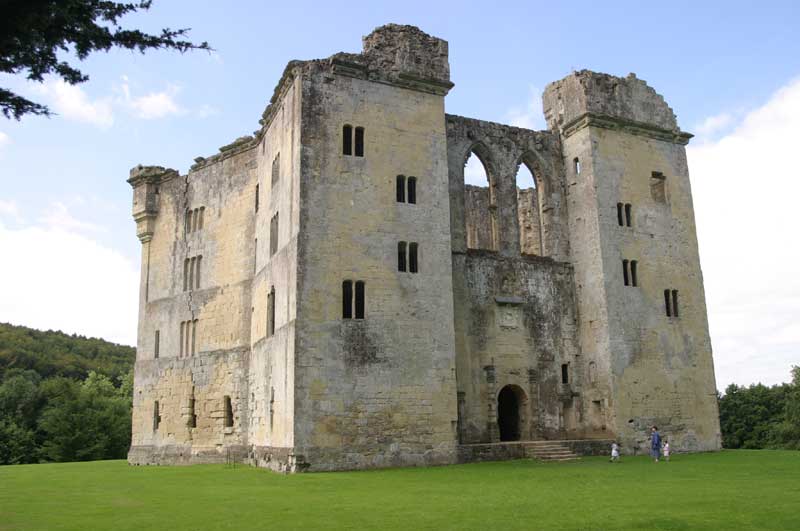
(Old) Wardour Castle was besieged by Sir Edward Hungerford and Edmund Ludlow for the Parliamentarians searching for Royalists. Lady Blanche Arundel within the castle lasted a week before surrendering. When Lord Arundell returned and found the castle in Parliamentarian control he laid siege to his own castle and had a mine detonated underneath it destroying the complete rear section of the building.

See Also Jul 5  -  Battle of Lansdowne Hill 
This battle was fought along a steep sided ridge near Bath. The Parliamentarians were led by Waller. The Royalists were led by Sir Ralph Hopton and Sir Bevil Grenville. Waller took advantage of the high ground and the Royalist suffered serious casualties as a consequence. The Royalists managed to reach the top of the hill and Waller moved his men back behind a defensive wall. Waller waited until the dark of night then moved his army off the battlefield. Sir Bevil Grenville was killed in the fighting and the day after the battle Hopton was seriously injured, suffering temporary blindness, when an ammunitions cart exploded.9

See Also Jul 10  -  Royalists cornered at Devizes 
The Royalists were badly affected by the injuries suffered at Lansdowne Hill especially when Hopton was injured by the ammunitions explosion. Waller took advantage of the Royalist army's weakened state and chased them to Devizes where they took refuge.9

See Also Jul 13  -  Battle of Roundway Down 
Once Charles learnt that Hopton was being held at Devizes, he sent Wilmot to meet up with Prince Maurice and put together a Royalist army to free the town. The Royalists and Parliamentarians met at Roundway Down just north of Devizes. Wilmot was able to drive the Parliamentarians back towards the top of a steep slope where, as the Parliament army fell, many were killed. The slope is now known as Bloody Ditch.9

See Also Aug  -  Corfe Castle rescued 
Corfe Castle was being besieged by Parliamentary forces. Inside the castle Lady Mary Banks with a small number of defenders had managed to hold the castle against much larger number of men outside. Lady Mary's husband, Sir John Banks, was elsewhere with King Charles at the time. Prince Maurice attacked and drove off the Parliamentary besiegers.9

See Also
 
Back to timeline ^ Top


1644
Events occurring at some time during this year 
Beeston Castle under Royalist control 
A Royalist army controlled Beeston Castle during 1644 and held out against a siege by a Parliamentarian army.10

See Also
Feb  -  Haverfordwest Castle falls 
Parliamentary forces led by Colonel Laugharne captured Pill Fort and the Royalists garrisoned at Haverfordwest Castle panicked and fled leaving the castle open for Laugharne's men to take.4

See Also Mar 29  -  Battle of Cheriton 
Parliamentary forces lead by William Waller defeated the Royalists lead by Lord Hopton and the Earl of Forth at Cheriton in Hampshire.3

See Also May  -  Advance on Oxford 
William Waller and the Earl of Essex were advancing on Oxford where the King was staying. The King had to remove his men from Reading and Abingdon so that an army could be raised to meet the threat. The King left Oxford leaving a garrison to protect the city and fled to Worcester. Essex ignored the King and took his army south where Lyme Regis was under attack. Waller was left to pursue the King.3

See Also Jun  -  Rupert advances on York 
Prince Rupert and his army had crossed the Pennines and was heading for York to rescue the city from the Parliamentary siege.3

See Also Jun 29  -  Battle of Cropredy Bridge 
With the Earl of Essex out of the way and the Parliamentary forces divided, the King turned to face William Waller. The two armies met at Cropredy Bridge on the River Cherwell in Oxfordshire. The King's army defeated the badly organised Parliamentary forces.3

See Also Jul 2  -  Battle of Marston Moor 
With the arrival of Prince Rupert, the Parliamentarian forces led by generals Leven, Fairfax and Manchester abandoned the siege of York and headed south. Rupert followed and attacked the rear of the column forcing the fleeing army to stop. The Parliamentarians held the higher and tactically better position on Long Marston Moor. The Duke of Newcastle and his Royalist men joined Prince Rupert to create an army of around 18,000 men while the Parliamentarians had a force of around 28,000 men and had better artillery. Late in the day the fighting began with an attack by Leven and Fairfax in the centre. The attack did not go well for the Parliamentarians and Leven and Fairfax left the battlefield. Whan all seemed lost a cavalry unit commanded by Oliver Cromwell on the left of the field attacked the Royalists and gained the upper hand. The Royalists were defeated leaving some three to four thousand of their men dead. 3

See Also Jul 16  -  York falls to the Parliamentarians 
After the Battle of Marston Moor the Royalists abandoned York and the Parliamentarians resumed the siege of the city. A couple of weeks after the battle the city surrendered and opened it's gates.3

See Also Sep 2  -  Royalist victory at Lostwithiel 
A Parliamentarian army controlled by the Earl of Essex surrendered to Charles I at Lostwithiel. Essex and some of his men managed to escape. Essex got to the coast and found a boat.3

See Also Oct 27  -  Second battle of Newbury 
Charles I met Parliamentary forces led by the Earl of Manchester and William Waller at Newbury. A disjointed attack by Manchester and Waller on different fronts failed to defeat the Royalist army but it was enough to leave Charles' position in peril so the King retreated and during the night his army was able to evade Manchester's outposts and escape towards Wallingford.3

See Also Nov 9  -  Charles returns to Donnington 
Charles I returned to Donnington Castle to get the guns he had left there. A battle could have been fought, one that the King was willing to take part it, but Manchester and the committee of generals declined because their forces were not in a fit state.3

See Also Dec 9  -  Parliament debates the failures of the army 
Parliament wanted a report into the failings of the army against King Charles I. At first the Earl of Manchester was blamed for his lack of commitment in the field but, to prevent a serious split in the country, Cromwell put forward a suggestion to change how the army was controlled. Cromwell admitted that being a commander was not easy and he himself had made mistakes on the battlefield. Cromwell's suggestion was that no member of the Commons or Lords should control an army. This would mean Manchester and the other generals would have to resign. It meant Cromwell himself would have to do so as well. Cromwell suggested that the army should reorganised.3

See Also Dec 19  -  Self-Denying Ordinance 
In Parliament the Commons agreed the conditions of the first Self-Defying Ordinance and passed it on to the Lords for their agreement. The Ordinance prevented a member of Parliament holding a military position.3

 
Back to timeline ^ Top


1645 Feb 15  -  The Lords passes the Ordinance 
The Self-Denying Ordinance was passed by the Lords after extra clarification was provided. The Ordinance set the size of the army to around 22,000 men and suggested the army should be controlled by Sir Thomas Fairfax.3

See Also Mar  -  Cromwell rejoins his army 
The west of England was under attack from the Royalist Western army commanded by Goring. The New Model Army was not ready and so Parliament ordered Cromwell to rejoin his regiment and to meet up with Waller. This went against the Self-Denying Ordinance under which Cromwell should have given up his command, but without his leadership Cromwell's regiment had become ill disciplined and mutinous. This was reversed when he again took command.3

See Also Jun 14  -  Battle of Naseby 
Sir Thomas Fairfax and the New Model Army caught the King at Naseby Field in Northamptonshire. Cromwell joined Fairfax and the combined Parliamentary force consisted of some 14,000 men while the King and Prince Rupert had around half that number. The King had a better position on the battlefield and had more experienced soldiers while some of the Parliamentary men were raw conscripts. For the Parliamentarians, Skippon commanded the infantry, Cromwell commanded the Ironsides to the left and to the right Ireton commanded his men. Both Skippon and Ireton were injured in the battle. Ireton was captured but managed to escape. Cromwell's Ironsides routed the Royalist army and the battle was won. King Charles was defeated. King Charles and his cavalry escaped to Leicester but he left has baggage train behind unprotected. Large amounts of the King's and his supporters money was captured by the Parliamentarians along with the King's personal letters.3

See Also Jun 18  -  Leicester Surrenders 
The Royalist defeat was complete when the King's men at Leicester surrendered to Fairfax and handed over their weapons and horses.3

See Also Jul 10  -  Battle of Langport 
Fairfax went to the south west to deal with the Royalist Lord Goring and the western army. The two armies met at Langport in Somerset. Goring set a trap for Fairfax in the narrow lanes of the countryside with musketeers hidden in the hedges lining the lanes. He also had two cannons positioned to fire down the lane on the attackers. This did not stop the powerful New Model Army whose own guns silenced the Royalist cannons. The Royalist cavalry were forced back leaving the musketeers exposed and picked off by their Parliamentary opposites. The royalists set fire to Langport and began retreating to Bridgwater with the Parliamentarians in pursuit, led by Cromwell and his Ironsides.
3

See Also Jul 21  -  Bridgwater falls to Fairfax 
Fairfax besieged Bridgwater in Somerset. The siege didn't last long as Fairfax had the fortifications scaled by ladders and the town surrendered.3

See Also Jul 29  -  Bath falls to the Parliamentarians 
The Parliamentarians captured the city of Bath.3

See Also Aug 15  -  Sherborne Castle taken by Fairfax 
After a two week siege the castle at Sherborne fell to the Parliamentarians.3

See Also Aug 18  -  Montrose enters Glasgow 
Montrose entered Glasgow and a new Parliament was convened in the name of King Charles I. The Convenanting leaders escaped to Berwick.3

See Also Sep  -  Royalist losses 
Cromwell took his forces into Wiltshire and captured Devies, Laycock House and Winchester, after a siege, from Royalist garrisons.3

See Also Sep 10  -  Royalists surrender Bristol 
Fairfax surrounded the city of Bristol which was held by Prince Rupert and several thousand Royalists soldiers. After a short siege Fairfax ordered an early morning assault on the city. Bristol fell to the Parliamentarians.3

See Also Sep 13  -  Battle of Philiphaugh 
After his successes in Scotland Montrose decided to go to England to assist the king. As he marched south he met a Parliamentarian army lead by Leslie. Montrose's forces had been greatly reduced as sections of his army had returned home with their spoils of war. Montrose was outnumbered and defeated. Montrose escaped. 3

See Also Sep 24  -  Battle of Rowton Heath 
King Charles had been staying at Raglan Castle but the fall of his support in the south west meant that he was not safe there. Charles decided to move north to meet Montrose who he believed was marching south from Scotland. Charles was unaware of Montrose's defeat at Philiphaugh on the 13th. Charles reached Chester which was held by the Royalists but under siege and entered the city. An attempt to free the city failed and Charles abandoned the city and headed for Newark.3

See Also Sep 26  -  Berkeley Castle falls to Parliamentarians 
After a short siege Berkeley Castle surrendered reducing even further the control that the Royalists had in the south west of the country.7

See Also Nov  -  Beeston falls to the Parliamentarians 
The siege at Beeson Castle came to an end when the commander of the Royalists led his men out. The castle was deliberately damaged in 1644 so that it could not be used again.10

See Also
 
Back to timeline ^ Top


1646 Jan 19  -  Fairfax captures Dartmouth Castle 
Only days after Hopton had taken charge of the Royalist forces in the south-west, Fairfax attacked and took the castle at Dartmouth capturing many guns and many prisoners.3

See Also Feb 3  -  Chester surrendered 
Lord Byron and the Royalists could not sustain their position in Chester against the Parliamentarian siege without food and ammunition any longer and the city was surrendered to Sir William Breton.7

Feb 16  -  Battle of Torrington 
Fairfax caught up with Hopton who was in North Devon at Torrington. The attack by Fairfax drove Hopton from the town and captured many of his men. Hopton managed to escape into Cornwall with several thousand horsemen but his men were demoralised and had started to desert him.3

See Also Mar 13  -  Hopton surrenders 
On March 13/14 Hopton finally surrendered to Fairfax at Truro. Charles, the Prince of Wales, had escaped earlier, sailing first to the Scilly Isles and then to Jersey in the Channel Islands.3

See Also Apr  -  Exeter falls to Fairfax 
After accepting the surrender of Hopton, Fairfax turned to the city of Exeter which surrendered to him in early April.3

See Also Apr  -  Charles escapes from Oxford  
The armies of Fairfax and Cromwell surrounded the city of Oxford where King Charles was besieged. Negotiations were held in an attempt to get a peaceful solution rather than lose men in a costly assault, but before the city surrendered Charles managed to escape in disguise. Charles hoped that the Scots would support his cause against Parliament. Charles had been using the French envoy, Jean de Montreuil, to communicate with the Scots.3

See Also May 5  -  Charles' escape 
After leaving Oxford Charles travelled with two companions, Ashburnham, his groom, and Dr Hudson, a chaplain. They travelled in disguise with the fear of being caught and waited for news from Montreuil about the Scots. On the 5th of May Charles reached the home of Montreuil in Southwell where he met a Scottish negotiator. The negotiator demanded that the royalist garrison at Newark should surrender, the king must sign the Convenant and establish Presbytery in England and Wales and order Montrose to lay down his arms in Scotland.

See Also May 9  -  Royalists at Newark surrender 
Charles agreed to some of the terms specified by the Scots and he ordered the royalist army at Newark surrendered. A few days later Charles ordered Montrose to disband his forces and to leave Scotland. The Scots then marched north with Charles as their prisoner to Newcastle-on-Tyne.

See Also Jun 15  -  Ireton marries Cromwell's daughter 
The marriage of General Henry Ireton to Bridget, the eldest daughter of Oliver Cromwell.3

See Also
 
Back to timeline ^ Top


1647 Jan 28  -  Charles handed over to Parliament 
Charles would never submit to the demands for Presbyterianism and so the Scots left the King in the hands of Parliamentarian Commissoners, received the money they were owed by Parliament and marched out of Newcastle. 11

See Also Nov  -  Charles I held at Carisbrooke Castle 
Charles I took refuge at Carisbrooke but the castle later turned out to be his prison from where he attempted several times to escape but failed.

See Also
 
Back to timeline ^ Top


1648
Events occurring at some time during this year 
Destruction of Haverfordwest Castle 
Cromwell ordered that the castle at Haverfordwest should be demolished.4

See Also
Previous 25 Years
1600 .. 1624
1625 .. 1649
1650 .. 1674 1675 .. 1699
 
Selection of references used:

1. Maurice Ashley, The English Civil War, 0-7509-0019-9
2. John Bowle, Charles the First, 0 297 76978 2
3. C.H.Frith, Cromwell, 1935
4. Mike Salter, Castles of South-West Wales
5. John Kenyon, The Civil Wars of England, 0 297 79351 9
6. S.R. Gardiner, History of the Civil War - Volume One, 1991, 0 9000075 10 4
7. C. V. Wedgwood, The King's War 1641 - 1647
8. Charles Carlton, Charles I The Personal Monarch
9. John Bowle, Charles the First
10. John Kinross, Discovering Castles in England and Wales
11. John Buchan, Montrose

Top of Page
Medieval and Middle Ages History Timelines - TimeLine
Bookmark this page with: StumbleUpon ToolbarStumbleUpon   Delicious Delicious
TimeRef Home Page   Episodes of Medieval History   Key Dates in Medieval History
People   Places   3D Buildings   Maps
Glossary of Terms   Architecture   Games