The Motte and Bailey Castle


 he Norman Conquerors built their castles in locations where they could keep control of the
local populations of
Saxons or at important locations such as river crossings or on key roads. Many motte and
bailey
castles were built on the border
with Wales to try and keep the Welsh at bay. The advantage of this type of castle was that it was quick to construct and could be built
within a matter of several weeks and making a fortification from wood was much easier than making one of
stone. Speed of construction was critical as the Normans needed somewhere that they could defend against
attacks from the Welsh.
he Norman Conquerors built their castles in locations where they could keep control of the
local populations of
Saxons or at important locations such as river crossings or on key roads. Many motte and
bailey
castles were built on the border
with Wales to try and keep the Welsh at bay. The advantage of this type of castle was that it was quick to construct and could be built
within a matter of several weeks and making a fortification from wood was much easier than making one of
stone. Speed of construction was critical as the Normans needed somewhere that they could defend against
attacks from the Welsh.

Key features
- Norman Castles - during and after the Norman Invasion
- Central wooden tower or stronghold (keep) raised on mound (motte)
- Dry or wet ditch around motte
- Outer court (bailey) surrounded by wooden palisade and dry or wet ditch
- Rapid construction - several weeks
The Motte
During the early part of the Norman invasion, the designers of these early castles built wooden towers on the top of a mound for protection. They either used an existing mound where one was available, enlarged an existing natural hill or more usually built their own mound on which they then constructed the tower or keep. At the top of the mound, around its edge, they built a wooden wall or palisade. The mound, now known as a motte, was usually surrounded by a ditch which in some cases could be filled with water.
The Bailey
At the foot of the motte was built a normally oval-shaped enclosure known as a bailey that had a palisade and a ditch of its own. The motte was usually placed to one side of the bailey rather than in the centre. Some castles had more than one bailey. An example of this type can be seen at Windsor which has the motte at the centre of two large baileys.
The arrangment of the motte and baileys was dictated by the conditions of the ground on which they were built. Although many of these castles had the motte at the edge of the bailey, some had the motte within the baliey. An example of this is at Skenfrith Castle in Wales. Where there was more than one bailey, the baileys could be arranged in a line to one side of the motte, or, as at Windsor, opposite each other with the motte at the centre.
Strategic Advantage
The motte and bailey design offered both defensive advantages and strategic positioning. The raised motte provided a strong defensive position for archers and defenders to rain down projectiles on attackers, while the bailey housed the essential facilities required for daily life within the castle walls.

Two Mottes
Some motte and bailey castles had two mottes. Examples include Lincoln Castle and Lewes Castle.
Under Attack
When the area around a castle was under attack, the local inhabitants could retreat first to the bailey and then to the motte if the attackers managed to enter the castle. From the top of the motte the defenders could throw missiles at their attackers and defend or even destroy the narrow bridge that linked the bailey to the motte.
Layout

An example plan of a motte and bailey castle. The Motte is the circular structure on the left. There are two baileys shown on the plan, an inner and outer bailey. The lines on the plan show how the ground rises and falls. The thicker end of each line indicates a high point and the thinner end indicates a low point. The remains of many motte and bailey castles can be found all over England. They can be located by looking for the ditches and banks that have survived for hundreds of years. The wooden palisades have long since rotted away but it is possible to guess how the castle may have looked in Norman times.
Evolution
Motte and bailey castles, while effective and quick to build, were often temporary structures. Over time, many were replaced or improved with more permanent stone fortifications, such as stone keeps, walls, and towers, as advances in castle construction and defensive techniques developed.
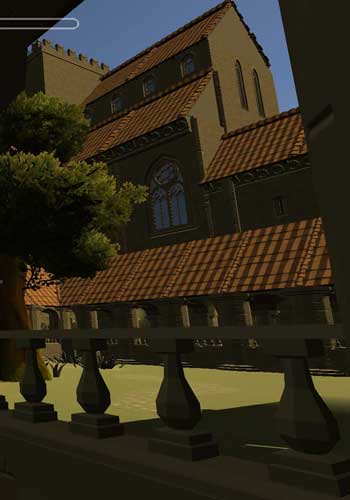
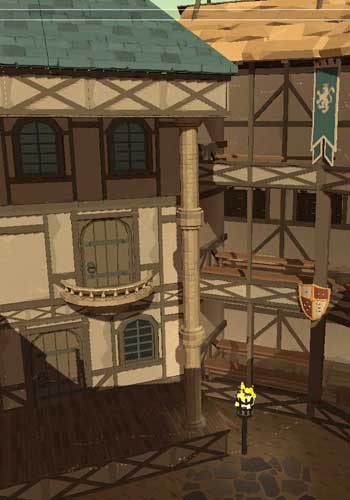
This video shows the motte and bailey reconstruction that you can explore either on a PC/laptop or mobile device.
Test Your Knowledge

Motte and Bailey Castles (1066 - 1100)
| Castle Name | Date | Location/Notes |
| Berkhampstead Castle | Soon after 1066 | Hertfordshire |
| Cambridge Castle | 1068 | Cambridgeshire |
| Caerleon Castle | Monmouthshire, Wales | |
| Clare Castle | Soon after 1066 | Suffolk |
| Lewes Castle | Soon after 1066 | Sussex/Two mottes |
| Lincoln Castle | 1068 | Lincolnshire |
| Ongar Castle | Essex | |
| Oxford Castle | Oxfordshire | |
| Pleshey Castle | Essex | |
| Shrewsbury Castle | 1069 | Shropshire |
| Thetford Castle | Norfolk | |
| Warwick Castle |
1068 | Warwickshire |
| York Castle | 1068 | Yorkshire/Two castles built |


More castle pages
Pages in this section
Types of castles
Pages in this section
Medieval Castles
Types of castles
- Early Fortifications
- Castles of William the Conqueror
- Keep and bailey castles
- Motte and bailey castles
- Square keeps
- Shell-Keeps
- Polygonal Keeps
- Concentric Castles
Other details
Medieval People