Life in a Medieval Town

The Saxon Burh
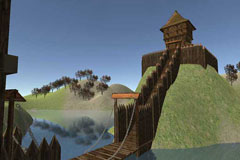
 he Anglo-Saxons had developed
the fortified
settlement known as a burh. The settlement was surrounded by banks and
ditches with wooden palisades on top. A number of gatehouses
controlled who entered the burh. The buildings inside the burh were
mostly made from wood or wattle and daub with thatched rooves.
The Old-English word for a settlement was a 'tun' which over time became
the word we use today, town.
he Anglo-Saxons had developed
the fortified
settlement known as a burh. The settlement was surrounded by banks and
ditches with wooden palisades on top. A number of gatehouses
controlled who entered the burh. The buildings inside the burh were
mostly made from wood or wattle and daub with thatched rooves.
The Old-English word for a settlement was a 'tun' which over time became
the word we use today, town.
The number and size of towns started to grow after the Norman Conquest in 1066 but in the medieval period agriculture was the most important job that a person could do. Even those who lived in towns would have worked in the fields around them. At harvest-time other trades would be suspended so that as many hands as possible could gather the crops.
Growth of Towns
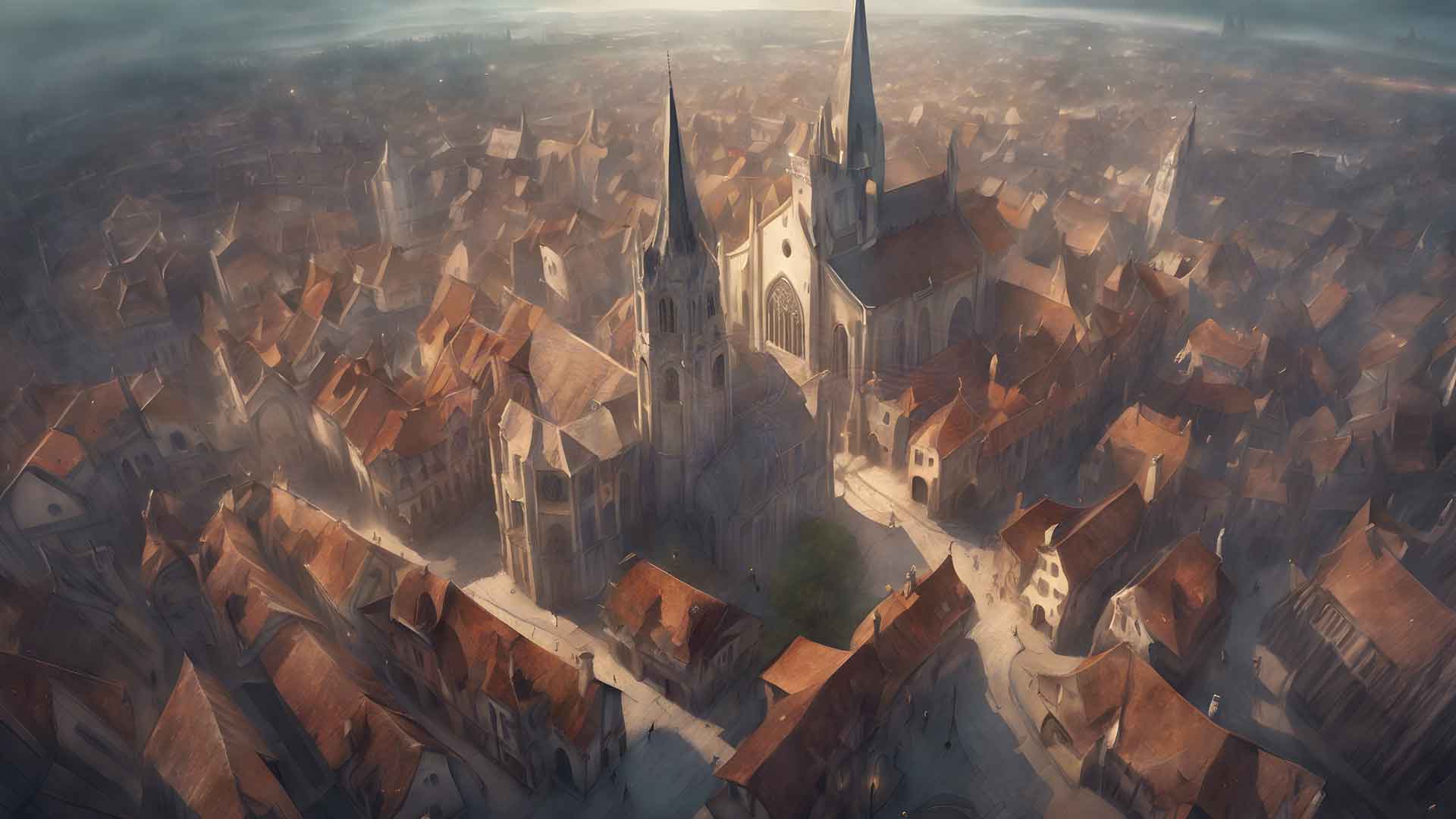
During the eleventh, twelfth and thirteenth centures many new towns were created. These new towns required protection from attack, both internal to the country and from invasion from abroard.

Some medieval towns flourished on the sites of early Roman and Saxon settlements. For example at London, Winchester and Canterbury. Some Roman towns had stone walls that were reused and improved.
Other towns were built on the manors of important lords or around castles and monasteries.
Many towns grew up where there was a natural advantage, e.g. at natural harbours, river crossings and at major crossroads where people could set up shops to sell to passers by. Some of these towns have names that reflect their position such as Cambridge and Oxford where easy river crossings could be controlled.
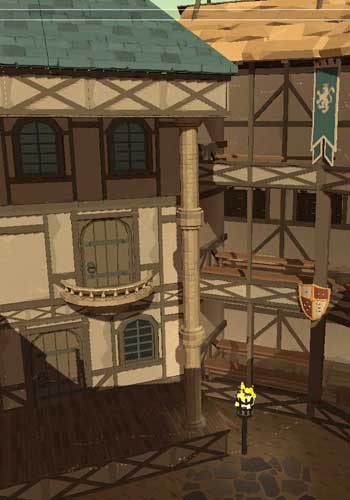
The houses were all made of wood and tightly packed together. The upper floors of the houses overhung the lower floors. Open spaces were confined to churches and markets.
There was little or no sanitation in the towns and raw sewage may have run through the streets. They were not healthy places to live.
Protection
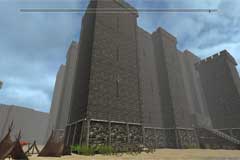
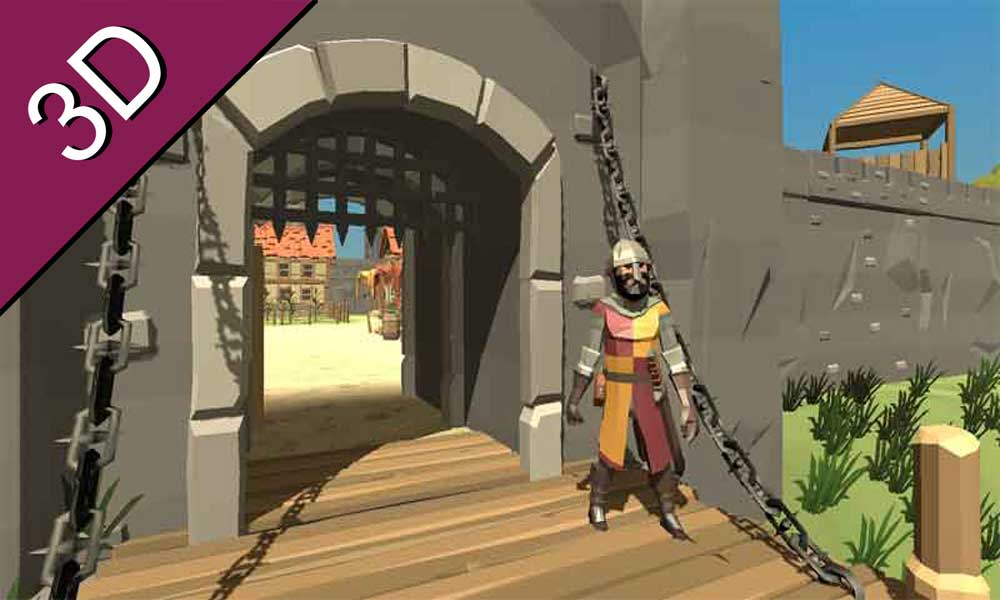
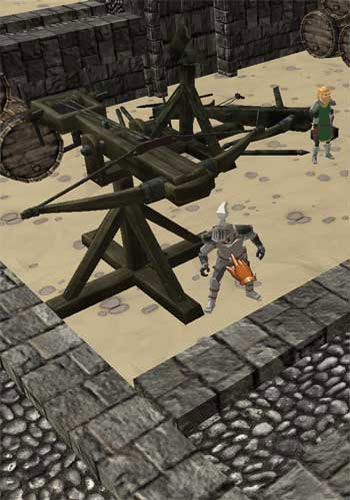
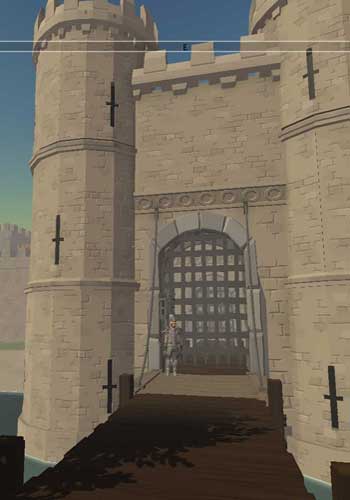
Deep ditches and strong walls were built around the towns to protect the towns people from attack and as a sign of wealth. Strong gatehouses were constructed at intervals around the walls with drawbridges for extra protection. At night the drawbridges were raised and the gates were shut.
Both castles and large churches would have provided protection in time of trouble and would have been a source of employment and somewhere to sell goods. Cathedrals and abbeys were also places where pilgrims visited and these people needed places to stay and places to eat. There were plenty of opportunities for work and new occupations to be taken up. Tradesmen moved into the towns to supply the needs of the inhabitants.

Taxes
Towns had to pay taxes to the king or local lord. Taxes were raised from tradesmen and visitors to the town. Gatehouses made it easy to collect taxes as everyone had to pass through a gate to enter or leave. Taxes had to be paid on all the goods that were to be sold in the markets and fairs. Where the town was next to a river the gatehouses were sometimes built in the middle of the bridges; the river acting as a natural moat.
Markets and Fairs

The large-scale commerce that existed at the time of the Roman Empire was mostly destroyed during the third century until the start of the eleventh century due to the invasions by the Germanic tribes and later the Vikings, who destroyed many of the trading outposts with their plundering. Commerce began to flourish in the eleventh and twelfth centuries as people began to sell the surplus food and goods they produced for money. Venice became a hub for traders and the coastal regions of Italy took their goods by sea around the coast to France. Markets and fairs were the main way in which medieval people bought and sold goods and these usually took place every week in the towns. Once or twice a year huge fairs were held in the bigger towns. These fairs could last for days and even weeks. The range of goods available was much larger than the local markets and included goods from other countries. Due to the Crusades there was much more interest in foreign goods and merchants from the East were welcomed to sell fine clothes, wines, spices and lace. One of the largest fairs in England was the Stourbridge fair held near Cambridge after the September harvest and could last for five weeks.

The tollgate
It's market day and a timber merchant approaches a tollgate on a bridge at the edge of a busy town. He pulls an old cart laden with heavy logs. The tollgate keeper, a important-looking man with a ledger and a staff, stands ready to collect fees..

"Well met traveler! Halt thy cart and declare thy wares! What business hast thou within the town?

"Good morrow, sir keeper. I bring fine timber from the western woodlands, bound for the carpenter's guild at market. Strong oaks and straight ash—none finer this side of the river.
"A handsome cargo, to be sure. Yet the law is clear. All who pass through this gate must render the toll. Three pence for thy timber.
"Three pence! Surely, thou jest! The roads were foul with mud and brigands scarce a mile back. And now, I must part with my meager earnings before earning a farthing?
"Aye, the roads be hard, but so is the keeper's duty. Think ye the crown's coffers fill themselves? The tax is for the upkeep of these very roads thou dost curse.
"Upkeep, sayest thou? Nay, good sir, a lesser toll would be just as 'tis more pothole than road! What sayest thou to two pence? I'll not see my wife and babes go hungry for want of thy toll.
"Thy plight moves me not, for the toll is not mine to alter. Yet, I am not without mercy. Perchance, a log from thy load might serve in place of the third penny?
"A log, thou sayest? Hmph. That'll mean less coin for me at market. But better one log than an empty purse. Very well, keeper, take thy timber.
"A fair bargain struck, methinks. This one shall warm my hearth come winter. Pass through, good merchant, and may thy wares fetch thee a handsome price! Safe travels, friend! And should thy cart return this way, thou knowest the toll!
Explore a medieval town
Click image below to start your exploration

Fires
Wooden houses with thatched rooves were a constant fire hazard in medieval towns. In 1135/6 a fire that started on London Bridge spread across a large part of the city of London damaging St. Paul's Cathedral. In 1189 a law was passed called the London Assize in response. To protect the buildings from fire the law stated that the lower floor of new houses must be built from stone and the roofs should be tiled. The quality of the stonework and tiles depended on the wealth of the owner, but it was hoped that this measure would put an end to the destruction.

| Year | Details |
|
A fire that started in the town of Gloucester spread to Gloucester Cathedral destroying treasures and all but a few books. |
|
|
On the same day that Henry I attended the consecration of Rochester Cathedral, a fire took hold in the city and damaged the newly finished building. |
|
|
The old wooden London Bridge across the Thames was destroyed by fire this year or in 1135. Note that St. Paul's was also damaged so the fire must have affected a large area of the city. |
|
|
York Minster was partially damaged by fire in this year. The near-by church of St. Mary's and some other 37 churches were also damaged. |
|
|
In 1177 or 1179 another fire took hold in the city of Rochester damaging Rochester Cathedral. |
|
|
The early cathedral at Rouen in France was badly damaged by a fire that destroyed other churches and parts of the city as well. |
|
|
A devastating fire at Worcester caused so much damage to Worcester Cathedral that the building needed to be reconstructed. |
|
|
In London a fire broke out on the southern shore of the River Thames and crossed the river starting more fires on the northern shore. Many people were killed. Boats tried to rescue people trapped on London Bridge but the boats became overloaded and many drowned. This appears to be a big a disaster as the fire of 1666. |
|
|
A fire takes hold in the city of Norwich and does geat damage. |
|
|
A fire broke out one night in February at the north end of London Bridge. Many of the houses on that end of the bridge were destroyed. The southern end of the bridge was saved because of a gap in the buildings near the chapel. As the tide was out at the time it was hours before the flames were brought under control and days before the last embers went out. |
|
|
The Great fire started in Pudding Lane and spread four ways at once. The fire spread over 373 acres and burnt 13,000 houses, 89 parish churches, leaving 11 parish churches standing. The Royal Exchange, Custom House, Guildhall, Blackwell Hall, St. Peter's Cathedral, Bridgewell, The Two Compters, 52 City Company Halls and 3 City gates destroyed. To prevent the fire happening again, it was decided to build the new structures from stone and brick. Christopher Wren was appointed surveyor-general and his plan to have wide streets was laid before the King but the citizens wanted to build their houses on the original foundations. The idea was to move all church yards and gardens to the outskirts to give enough room for the changes. The chance was lost of making London the most spacious and clean city in Europe. |
Heraldry
Many towns and cities have their own coats of arms.
London
Corporation of the City of London
Argent a cross Gules, in the first quarter a sword in pale point upwards of the last.
Click shield to edit
Winchester
Winchester city once had five city gates, which are depicted as castles on the city's emblem. While only two original gates, Westgate and Kingsgate, remain today.
Click shield to edit
Lincoln
Argent on a cross gules a fleur-de-lis or. The fleur-de-lis is the official symbol of the City of Lincoln.
Click shield to edit
York
The coat of arms of York. The blazon of the arms is Argent, on a cross Gules five lions passant guardant Or.
Click shield to edit
Southampton
A shield with a division per fess, gules and argent. With three roses.
Click shield to edit
Plymouth
A shield argent, a cross saltire vert between four towers sable.
Click shield to edit
Chester
Click shield to edit
Carlisle
A shield or, a cross formee gules with a rose or between four roses gules.
Click shield to edit
Richmond, Yorkshire
A shield gules, a bend ermine above an orle argent.
Click shield to edit
Merchants
Guilds

In the towns traders and merchants formed guilds. The members of the guilds helped protect each others interests and also control quality ensuring all the members did work to a suitable standard.
Over time separate guilds were created for each type of trade and it was common for all shops selling one type of product to be located in the same area of the town. The idea of selling one kind of product in one area still happens today. Some cities have jewellery quarters for example.
Henry II recognised the powers of the guilds and wanted his share of their wealth. Henry claimed that every guild had to be licensed and pay a tax straight to the King. Any guild that was not licensed was fined.
Members of the guilds paid a membership fee and the guilds became powerful and wealthy. Some guilds built their own meeting places call guildhalls where meetings and banquets took place. Guilds also helped their members if they fell ill and looked after their family after they died. Guilds used their wealth to put on plays called mystery plays that were based on stories from the Bible. The word mystery is probably a mispronunciation of a medieval word for guild or craftsmen.
On this day in history:
Trade Difficulties
Transporting goods by land meant paying duties for using roads, fords and bridges. Each required some kind of payment and caused delays. Payments may have included giving up the best produce leaving only the damaged to continue.
Roads were of poor quality, even the Roman roads, and bridges were not common.
Transporting goods by sea was even more hazadous. Pirates were common and without the lighthouses we have today it was common for ships to run aground and get stranded. The goods of stranded ships could be claimed by the owner of the land that bordered the sea where they ran aground.
Guilds for the clothing and leather industry
| Guild Name | Description | Guild Name | Description |
| Mercers | Dealer in the textiles | Drapers | Another dealer in textiles |
| Fullers | Cleaners and preparers of cloth | Dyers | Cloth Colouring |
| Skinners | Dealer in the fur trade | Tailors | Maker of clothing |
| Girdlers | Maker of belts | Cordwainers | Maker of shoes |
| Pinners | Pin maker or assistant to dress maker | Curriers | Curers of Leather |
| Tanners | Processing animal skins |
Fabrics for the Lady of the Manor
"In a bustling market stands a stall laden with bolts of fabric in vibrant hues and intricate patterns. The shopkeeper, a man with a fine beard and a merchant's cap, greets a young maid dressed modestly but neatly.

"Good morrow, mistress! What fine wares dost thou seek this day? Behold, silks from the East and velvets from Venice—fit for a queen's gown or a lady's chamber!

"Good morrow to thee, good sir. I come at the bidding of my lady, the Mistress of the manor. She desires fabrics of rare quality for her new gowns. Hast thou anything of exquisite fineness?
"Aye, that I have, fair maid! Here, feast thine eyes upon this silk of from the Far-east. Radiant as the dawn and soft as ermine fir. And here, velvet from Venice, deep as the midnight sky. Thy lady will be the envy of all Court!
"Indeed, such splendor would please her greatly. But speak plain, merchant, for thy tongue is silvered. What price dost thou set upon these treasures?
"Ah, thou art shrewd, mistress! For thee, I offer fair prices. The silk, a mere ten groats a yard, and the velvet, fifteen. Such quality is scarce in these parts, I assure thee.
"A fine price indeed—for a king's coffers, perchance. My lady is generous but not foolhardy. Wilt thou not show kindness to a faithful servant who must account for every coin spent?
"Thou drivest a hard bargain, mistress. Very well. For thee and thy noble lady, I shall offer the silk at eight groats and the velvet at twelve. But mark my words, this is my lowest, else I would starve my own kin!.
"A fairer offer, and one my lady shall approve. Wrap me two yards of the silk and three of the velvet. But add this—should my lady be pleased, thou shalt gain her favor, and her patronage is worth more than mere groats.
"A wise maid thou art! Thy lady’s custom shall bring me great honour. I shall wrap thy wares with care. May thy lady shine like the stars in her new raiment. Godspeed!

Guilds for the food and wine industry
| Guild Name | Description | Guild Name | Description |
| Fishmongers | Selling fish | Vintners | Dealers in the trade of importing and selling wine |
| Cheesmongers | Dealing in cheeses | Fruiterers | Sellers of fruit |
| Cooks | Specialised in cooking | Bakers | Bakers of bread |
| Poulters | Sellers of poultry, swans, pigeons, rabbits and small game | Brewers | Brewers of beer. An important source of nutrition |

Guilds for construction, metals and jewelry
| Guild Name | Description | Guild Name | Description |
| Goldsmith | Traders in gold | Silversmith | Traders in silver |
| Joiner | Wood workers not using nails | Founders | Workers in brass and brass alloys |
| Carpenters | Wood workers using nails | Plumbers | Craftsmen working with lead |
| Locksmiths | Makers of locks | Founders | Workers in brass and brass alloys |
| Ironmonger | Metal workers | Coopers | Barrel makers |
Guilds employed with horses
| Guild Name | Description | Guild Name | Description |
| Saddlers | Makers of horse saddles | Corsour | Dealers in horses |
| Lorimer | Makers of metal parts for bridles | Farriers | Makers of shoes for horses |
Guilds making arms and armour
| Guild Name | Description | Guild Name | Description |
| Boywers | Makers of bows | Fletchers | Makers of arrows |
| Armourers | Makers of shields and armour | Cutlers | Makers of knives, swords and cutlery |
| Swordsmith | Makers of swords |

Other
| Guild Name | Description | Guild Name | Description |
| Chandlers | Makers of candles | Apothecaries | Makers and dispensers of medicines |
| Barber-Surgeons | Cutting of hair, but also doctors. |
Sanitation and the Plague
Sewers and toilets as we know them today did not exist in medieval times. Some households had toilets that emptied directly into a stream but most people did not have this luxury. A chamber pot was used by the household and then emptied directly out onto the street in front of the house. At times it was easier to empty the waste from the upper floors giving some warning to those below to keep clear. Laws were passed to ensure people did not pollute neighbours property and to clear up the mess. Many towns had a ditch used as a sewer and was filled not only with human waste but also the stinking waste that was the result of the butchers and tanners making leather. The town ditches were designed so that they emptied into a river when it rained so that the waste was washed away.
| Year | Details |
|
The Black Death. Black Death or Bubonic plague was spread by the rat flea. The name Black Death came from the colour of the swelling in the groin, armpit or neck. The person suffering went into a coma and dies soon after. In Europe an estimated 25 million people died. The plague reached Britain in 1348 and again in 1360 and the population may have been reduced by a half. |
|
|
Another outbreak of the plague takes its toll. In Avignon many people died including several Cardinals. |
|
|
London Plague. A great plague took hold in London, killing upwards on 30,000 people. |
|
|
An outburst of plague occurred sometime between 1405 and 1407 and the pestilence was so great that, according to the St. Albans chronicler, in London thirty thousand men and women were reported to have died in a short space of time. Henry IV is thought to have left London to wait for the plague to die out. |
|
|
Paris devastated by plague. Within three months, 40,000 people in Paris were killed by the plague. |
|
|
Possibly 10,000 died from the plague in London this year. |
|
|
The plague arrived in England and affected London. The king escaped to Calais while the pestilence was at its worse. |
|
|
Londoners were affected by a wide-spread illness forcing King Henry VIII and his court to move to the countryside where they felt safer. |
|
|
A severe outbreak of the plague occurred in London and started a trend of yearly outbreaks during the summer months until 1610. |
|
|
Britain was affected by another outbreak of the plague. A large number of people died in London, possibly 35,000 or more. |

Entertainment
Click the image to explore a medieval theatre.
Medicine
Explore the apothecaryPage Navigation
Medieval Heraldry

Design your own medieval Coat of Arms.
Glossary of terms
Manor: The land owned by a lord and occupied by dependent
farmers.
Demense: Lord of Manor's own land.
Villeins: Villagers who were owned by the Lord of the Manor and could
not leave..
Hide: An area of land about 120 acres in size.
Caracute: Another name for a hide.
Hundred: Enough land to support a hundred homes.
Freemen: Villagers who were free to leave the village.
Cottars: The poorest villagers.
Reeve: Villager elected to representative the villagers.
Hayward: Villager ensuring aminals did not stray.
Dovecote: Building where pigeons and doved were raised.
Virtual Buildings
Transport yourself back up to a thousand years and explore historical buildings as they may have appeared in the past.