Holy Land Knights - The Knights Templar

The Knights Templar
Inspired by the success of the Knights Hospitaller, a knight from Burgundy called Hugh de Payens, along with a hand full of other like-minded knights, formed a group to assist the pilgrims. Their purpose was to guide and protect the pilgrims on the dangerous roads to Jerusalem where bands of robbers frequently attacked, robbed and killed the unwary travellers.
There were possibly nine knights who went to Jerusalem, including Godfrey de St Omer, Andre de Montbard and Hugh de Payens who was their leader.
In 1118/9 the knights offered their services to the ruler of Jerusalem, Baldwin II. In return Baldwin offered them a place to live. They took up residence near the Dome of the Rock in Jerusalem which was formerly the Muslim Al-Aqsa Mosque. This was a sacred place for both Muslims and Christians. Christians believing it to be the former site of the Temple of Solomon. From this location the knights became known as the 'Order of poor fellow-soldiers of Christ and Solomon's Temple' or later just the Knights Templar.
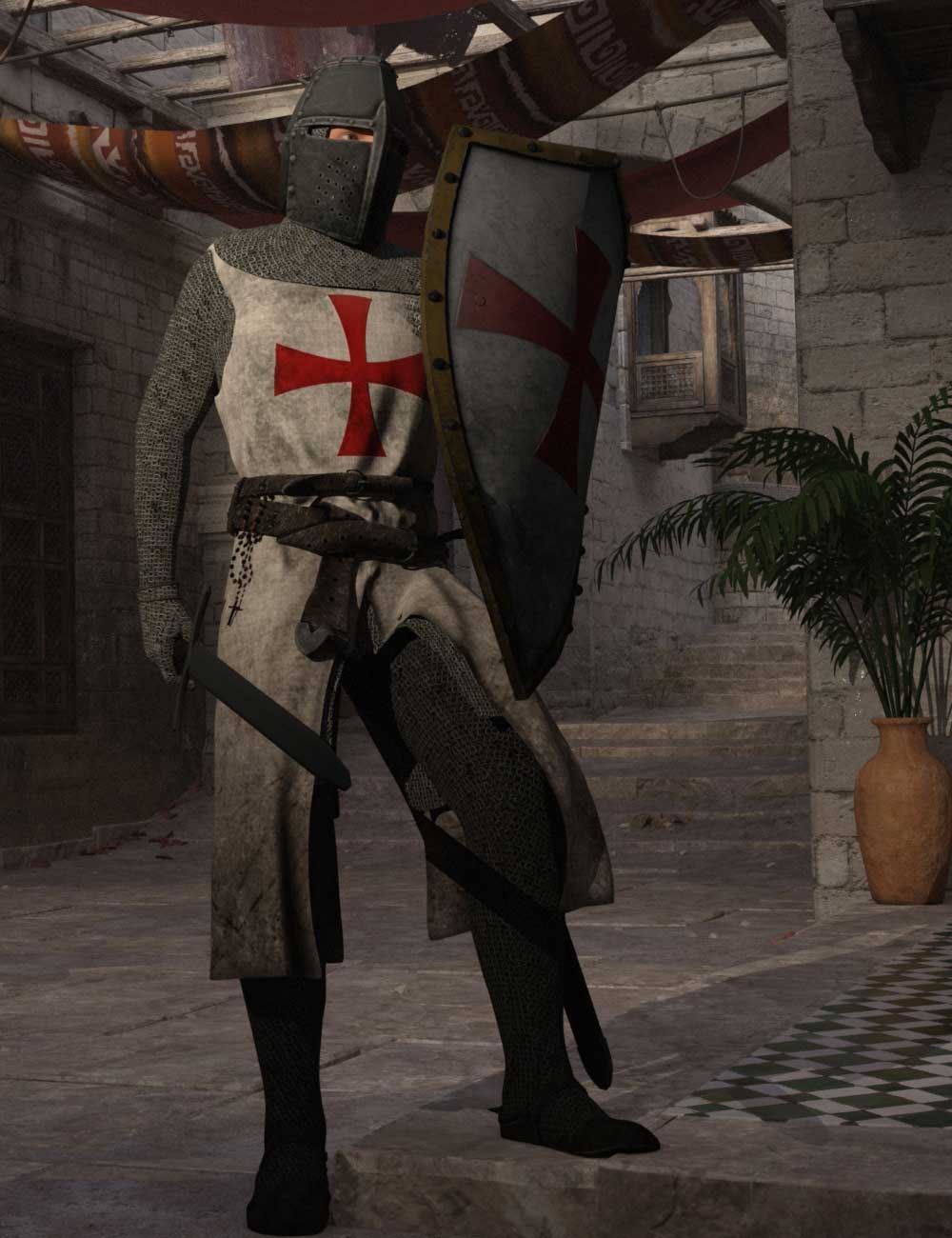
In 1126 Hugh de Payens travelled back to Europe to raise funds and recruit new members for the order. On his travels he met Bernard of Clairvaux, the French abbot responsible for the expansion and success of the religious order of Cistercians. With the support of Bernard, Hugh was able to secure donations and recognition for the Knights Templars. This recognition was ratified at the Council of Troyes in 1129 and authorised by both Pope Innocent II and the Patriarch of Jerusalem. The knights were given a set of codes by which they should conduct themselves based on the Benedictine Order. They were also granted permission to wear the white mantle, a cloak with open sides worn over their other clothes or armour. Hugh de Payens was appointed the title Master of the Order. Before the Knights Templar came along the Church had not had any soldiers at its disposal. The Church had used the armies of friendly Kings to help solve disputes, but now the Church had the beginnings of its own army, an army of warrior monks. Later it was declared by Pope Innocent II that the order should answer only to the Church and not to any king or other higher authority.
Donations led to wealth
Next followed a tour of Europe where Bernard and Hugh de Paynes spread the word of the Templar's work and where many were eager to here of the Templars' exploits. Donations of money were given, but more importantly, donations of land were offered. The potential for making profits from the management of these lands was recognised and the money used to fund the Order's activities in the Holy Land. Preceptories (monastic dwellings for the Templars) were built on the land and new members were recruited into the Knights Templar order to work and manage the holdings and act as recruiters to find more members who would travel to Jerusalem. The Preceptories were also used as training camps for the new recruits before they were transported abroad.