By Category
By Category
Please note that the TimeRef website is currently being redesigned.
Timeline of Military Events to 1000ad

642
Summer
Oswy, the brother of Oswald, became King of Bernicia, successfully reigning for almost thirty years. He would later defeat Penda at the Battle of Winwaed.
793
The first reported case of Viking raids on the coastal area of Northumbria occurred in this year.They plundered many churches including that at Lindisfarne. Many monks and nuns were killed and treasure was taken away.
801
Charlemagne's son Louis captured the city of Barcelona.
802
The monastic community founded by St. Columba on the tiny island of Iona off the west coast of Scotland was attacked by the Vikings. The Vikings returned in 806 killing over sixty of the people living there.
807
The monastic community on the tiny and remote island off the north west coast of Ireland was attacked by the Vikings.
814
The monastery on the island of Noirmoutier just to the south of the River Loire's mouth was attacked.
818
Bernard, the king of Italy, and nephew of Louis I, rose up in revolt as he had been overlooked in the division of the empire. His army was weak in comparison to that of Louis and Bernard was captured, Louis could have have Bernard executed, but had him blinded instead. Even so, Bernard died several days later.
832
Egbert, the king of Wessex, defeated Beornwulf, the king of Mercia at Wilton to establist the power of the area of Wessex.
835
It appears that the raid on the Isle of Sheppey in Kent was the start of a trend of attacks by the Vikings.
836
A fleet of possibly 35 ships landed a Viking army in Devon. Egbert fought the Vikings at Carhampton but was defeated by the invaders.
Up until now the Vikings had raided islands and coastal communities but now they launched inland attacks. The Vikings attacked Southern Ui Néill and they took captives.
837
A Viking raiding party assisted by local Cornish men was defeated by Egbert of Wessex at the Battle of Hingston Down
841
A fleet of Viking longboats sailed up the River Seine to Rouen. There they plundered the city of its wealth.
843
Saling their longboats up the Loire River allowed the Vikings to travel far inland. They reached the city of Nantes which they plundered and killed those who lived there.
Rather than sailing back to Norway the Vikings began to build camps and remain where they were over the Winter months. They chose the island of Noirmoutier off the mouth of the Loire River as their base.
845
The Vikings captured Forannán, the Abbot of Armagh. Attempts to drive the Vikings out failed and the Vikings won a key battle at the fortress on the Rock of Dunamase.
Easter
A Viking army attacked Paris after its inhanbitants fled for their live. The Vikings also plundered the banks of the River Seine.
851
The Danes landed at Wembury near Plymouth and were defeated by forces from Devon. A sea battle off the coast of Kent led by Athelstan (eldest son of Ethelwulf) defeated a Danish fleet of vessels and Ethelwulf defeated an army of Danes at the battle of Ockley who had arrived in the Thames and were attacking the south of the country.
852
The first Viking raiding party to stay in England for a period of time landed at the Isle of Thanet in Kent. They spent the winter in England.
865
A large army of Danes landed in East Anglia led by King Ivar the 'Boneless' and King Halfdan. No attempts were made to get rid of the invaders.
866
The Danes led by the sons of Ragnar Lodbrok, Ivar the boneless and Halfdan, attacked Northumbria and York. They wanted revenge for the death of their father who had been killed by Aella, the King of Northumbria. (Aella could have been an Irish Prince.) The Danes destroyed many churches and monasteries including Whitby Abbey. The monasteries remained ruined for two hundred years. (This may be a legend as Aella was supposedly killed at York)
A large number of Vikings landed in East Anglia and gathered horses and supplies from the surrounding areas in preparation for their assault on Northumbria. Their leaders were Ivar the Boneless, son of Ragnar Lodbrok, and possibly Anlaf (Olaf) Cuaran, the King of Dublin.
Vikings raiders were driven from the northern coasts of Ireland by Aed Finliath.
The 'Great Army' moved north from their original landing site in East Anglia and into Northumbria where it split into two. One section took boats up the coast and sailed into the Humber while the other section went overland. York was captured and renamed Jorvik.
867
Mar 21
Armies from Northumbria led by the two kings Aella and Osberht attacked the Danes at York but were defeated. The two kings were killed after gaining access to the city. After the battle the Danes moved south attacking Nottingham and taking control of it. The king of Mercia asked Ethelred and Alfred for assistance and an army from Wessex was sent to help.
868
Ethelred and Alfred married Mercian noble women whilst assisting the King of Mercia with the Danes on his land. A peaceful settlement was reached with the Danes and a Danegeld was paid for them to leave.
869
Moving south again from York, The Danes entered East Anglia, attacking and destroying the many religious buildings in the area including the monastery at was what to become Peterborough. The King of East Anglia, Edmund raised an army to attack the Danes but was captured and killed.
870
The Danes attack Crowland Abbey and burn it down.
The Vikings laid siege to Dumbarton Rock. The siege lasted for four months after which the defences fell and the Vikings took prisoners and treasures to Dublin.
The Danes moved south into the Wessex area and captured Reading.
871
During the period between 871 and 875 while the Danes were occupied in the north, Alfred had time to rebuild his defences.
Qtr 1
Aethelred and Alfred defeated the Danes at Ashdown.
Another army of Danes landed in London and were joined by those at Reading. The army defeated Alfred at Wilton and so the king decided to pay the Danes some money to keep the peace.
872
Ivar 'the Boneless', the king of Dublin died. He was succeeded by his brother Halfdan.
875
Led by Halfdan the Danes moved north to attack the Picts and the area of Strathclyde. The Danes divided Northumbria taking York for themselves and creating the area known as Danelaw. A second Danish King called Guthrum took his army back south to Cambridge where he prepared plans to attack Wessex.
Alfred the Great organised a small number of ships to attack invading Danes.
876
Led by Guthrum, an army of Danes moved to Wareham in Dorset where they were met by a new army from the sea who landed at Poole. Alfred trapped the army and demanded hostages in return for a peaceful settlement. The Danes divided, half fleeing to Exeter where they besieged the town while the other half escaped in their ships but were drowned in heavy seas. Those at Exeter were forced to surrender and were moved up to Gloucester.
The Vikings made York the capital of their kingdom in England. They called it the kingdom of Jorvik.
878
After Exeter. Alfred was hoping that trouble with the Danes was over, but again led by Guthrum, an army headed for Alfred at his Chippenham residence. Alfred fled under overwhelming odds leaving Chippenham in the hands of the Danes.
Spring
During the winter and spring period Alfred was in hiding. He ran a guerrilla warfare style war against the Danes and set up his headquarters on the Isle of Athelney in Somerset. It was on one of his scouting missions (the story goes) that he took refuge and not being recognised as the King was asked to watch the cakes which he burnt.
Alfred called for his men to form an army and attack the Danes. He ordered the army to meet at a location known as Egbert's Stone and seven weeks after Easter an army was formed. Once formed the army quickly moved towards Guthrum and the Danes and the two armies met at Edington. The battle at Edington was won by Alfred and the Danes retreated to Chippenham. The Danes were surrounded and surrendered. Guthrum along with several other high ranking members of the Danish army were converted to Christianity under Alfred's sponsorship. Guthrum and Alfred agreed on peace terms and the Danes returned to their holdings in East Anglia known as the Danelaw.
879
After the success at Edington Alfred decided to construct of a series of fortified villages or burhs to help protect Wessex. He set up a system that provided Wessex with both a standing army and defence at a local level.
A new Viking fleet sailed up the Thames and built a camp at Fulham. For Alfred this was a worrying situation as he was unsure if this new Viking army would move to join Guthrum. Alfred did not have to worry as the army soon broke camp and headed for France.
Apr 10
Vikings were again pushing into Europe and King Louis II started a campaign against their advance, but he fell ill and died. He was succeeded by his two sons Louis and Carloman who jointly ruled the areas of France.
881
A battle in which Louis III, King of France defeated the Vikings.
882
Alfred had been increasing the size of his new navy and in 882 used it to good affect when he sailed out to attack four Viking ships. Two Viking ships were captured and their crews killed.
885
A fleet of Viking longships sailed up the River Seine heading for eastern France and new lands and cities to plunder, When they reached Paris the Vikings offered to spare the city if they were allowed free passage up the river. The river was blocked by bridges that crossed and prevented even the Viking ships passage. Their request was denied and so the Vikings laid siege to the city. The siege was broken when an army led by Emperor Charles the Fat arrived. Charles agreed to pay the Vikings off and allowed them passage past Paris to Burgundy which they plundered,
886
Alfred took full control of London and strengthened its defences in defiance against Viking attacks. London had not been a capital town before now but Alfred raised London's status.At some point in this period of time Alfred and Guthrum signed a treaty agreeing to several conditions. The first condition being a boundary thought to define the extent of the Danelaw, the area where the Vikings were living in England.
890
...
Guthrum, the king of the Danish Vikings in the Danwlaw died in 890. The peace agreements with King Alfred were maintained by his successor.
893
A huge army of Danes travelled from Boulogne using some 250 ships and crossed the Channel landing in Kent at the Lympne Estuary, now called the River Rother. The army found a half-completed Saxon fort at Appledore which they attacked and took control of. At the same time another Danish army led by Haesten had arrived in the Thames estuary and set up camp at Milton. Alfred was facing a serious threat but decided to position his army half way between the two enemy encampments and wait.
894
While Alfred concentrated his efforts against the Danes at Milton, the Danes at Appledore left their camp. Alfred's son Edward took an army and caught the Danes at Farnham. Edward dealt a heavy blow and forced the Danes to retreat to an island on the River Colne. At the same time Danes from East Anglia had sailed around to the Cornish coast and had besieged Exeter. Aflred, who had been on his way to help Edward deal with the Danes on the island, changed direction and headed for Exeter. Back in Essex Haesten had gained reinforcements and moved to a new fortified site at Benfleet, but the fort was attacked by the Saxons while the Danes were on a raiding trip and this forced Haesten to move to Shoebury. The Danes outside Exeter ended their siege and sailed around to the join Haesten at Shoebury.
The combined Danish army left Shoebury and marched west up the Thames valley through Worcestershire and up the Severn valley finally reaching Chester where they were besieged by the Saxons who tried to starve the Danes out. The Danes managed to escape into Wales where they raided and left with a great deal of spoils. The Danes returned to the estuary of the River Thames and built themselves a new camp on the River Lea around 20 miles to the north of London.
900
Constantine claimed the throne of Scotland when Donald II was killed in battle.
902
The Norse that had occupied Dublin were expelled with nowhere to go. Over the next few years they attacked Wales, Scotland and North West England.
Athelwold and Eric the Dane were killed in battle when they fought an army of Kentish men who were part of King Edward's army.
906
Edward the Elder managed to agree peace terms with the Danes in Northumbria but friendly relationships were not to last.
910
Edward the Elder of Wessex with help from Aethelred of Mercia defeated Danes from York at the battle of Tettenhall (Wednesfield) in Staffordshire. Many of the Danes were killed in the battle including Halfden. The West Saxons and Mercians laid waste to Northumbria for several weeks after their victory.
912
Aethelflaed, Lady of the Mercians, built a burh first at Shrewsbury and then at Bridgnorth.The defences were needed to protect the people from the Danes.
914
Vikings landed at Waterford in Ireland and established a base.
Aethelflaed, the Lady of the Mercians, founded the town of Warwick at the important river crossing across the River Avon. The town was fortified againt attack from the Danes.
917
The Danes were defeated at the battle of Tempsford and their leader Guthurm was killed.
927
When Sihtric died he left an heir Olaf. The king of the Norse in Dublin arrived to assist Olaf but Athelstan was ready for any trouble that they could do and defeated them. York was seized and its fortifications destroyed.
930
The abbey church at St. Albans was attacked and damaged by Vikings.
934
Athelstan put together a large army and invaded Scotland destroying it as he advanced north.
937
The Dane Olaf Guthfrithson or Anlaff (possibly Sihtric's son), Owen of Cumberland and Constantine, King of the Scots sailed into the Humber to invade Northumbria. Athelstan's speed at raising his army that marched north put paid to any plans of invasion and a fierce battle occurred (Brunanburgh near Beverley ?) in which many Danish kings and earls were killed. Olaf Guthfrithson fled to Ireland. Edmund, Athelstan's younger half-brother also took part in the battle.
939
Olaf Guthfrithson, who had been defeated at the Battle of Brunanburh and who had fled to Ireland, returned to England and invaded Northumberlan taking the city of York. King Edmund took an army north but after a brief battle neither side had gained any advantage. The Archbishops of Canterbury and York negotiated a peace treaty that effectively divided the country in two leaving Edmund ruling the south and Olaf ruling the north.
944
Edmund I took control of York and the surrounding area. He removed sacred relics from the remains of Whitby Abbey and moved them to Glastonbury Abbey.
948
Eadred destroys the monastery at Ripon.
954
Eadred defeated Eric Bloodaxe the Dane that had ruled the kingdom of York on and off for several years. Eric was killed and Eadred took control of the kingdom of York. Eadred nominated Oswulf as the new ruler of Northumbria.
957
Conflicts between the brothers Eadwig and Edgar were resolved and the agreement between the two resulted in the lands of England being split. Edgar took control of lands to the north of the Thames, including Mercia and Northumbria, while Eadwig retained Wessex, the lands to the south of the river.
980
With Aethelred on the throne for a short time and possibly showing some weakness in his ability to rule, the Vikings started their attacks. Concentrating on the south coast the raids were limited and the affect to the country as a whole was small.
988
In Somerset Viking raiders attacked and burnt the village at Wachet. Streonwold, the local English leader, called for help from the surrounding population and a battle was fought. The Vikings won the battle and Streonwold was killed.
991
Under the leadership of Olaf Trygvasson the Vikings attacked the wealthy south-east coast of England and took as much riches as they could carry.
The raiding Vikings attacked the Ipswich area of England before sailing into the Blackwater river estuary near Malden. The English were waiting for them and trapped the Vikings in rising tidal waters. The English fought bravely and a poem was written about their exploits but in the end the Vikings were victorious and the English were defeated.
Aethelred was advised by Archbishop Sigeric to talk to Olaf and arrange a truce rather than trying to defeat the Vikings in battle. The Vikings accepted a large payoff and left. The sum of money was around 10,000 pounds and was raised by collecting a land tax known as Danegeld.
992
Fulk Nerra defeated the count of Brittany at the battle of Conquereuil.
King Aethelred decreed that all sea-worthy ships should gather in London and then put to sea and destroy the Viking army. But alderman Aelfric sent word to the Danes the night before the attack of the King's plan which allowed them to escape. Aelfric then fled.
994
Swein Fork-Beard had overthrone this father King Harold Blue-Tooth Gormsson, King of Denmark in 988. With a huge fleet of 94 ships he arrived in the Thames estuary with Olaf Trygvasson by his side. London put up a good defence and drove the Vikings back so Fork-Beard moved his forces again to attack the south-east coast to plunder what he could find.
Through the Winter months Aethelred provided the Vikings with lodgings and £16,000 in cash to stop the raids on his land. Aethelred was also the sponsor at the baptism of Olaf Trygvasson. Olaf was given instruction from the Aelfheah Bishop of Winchester.
997
The peasants in Normandy rose up against their masters including the Count of Evreux, the uncle of Richard II, the Duke of Normandy. The revolt failed when the leaders were captured and executed.
A Medieval Mystery
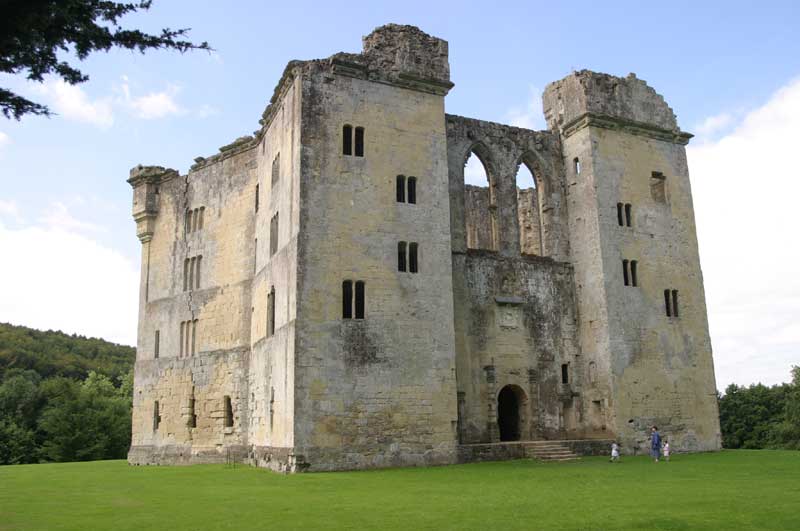
There appear to be some strange connections between the fourteenth century Old Wardour Castle and ancient stone circle Stonehenge.
1: Location
Old Wardour Castle appears to be aligned to ancient sites in the Stonehenge landscape.
2: Alignment
Stonehenge is aligned to the Summer Solstice. Old Wardour has a very similar alignment.
3: Size
Could the builders of Old Wardour used mesaurements from Stonehenge to layout the geometrical keep?
Learn More